Tips for Wholesale Suppliers
How to Get More Orders from Retailers - Without More Sales Calls
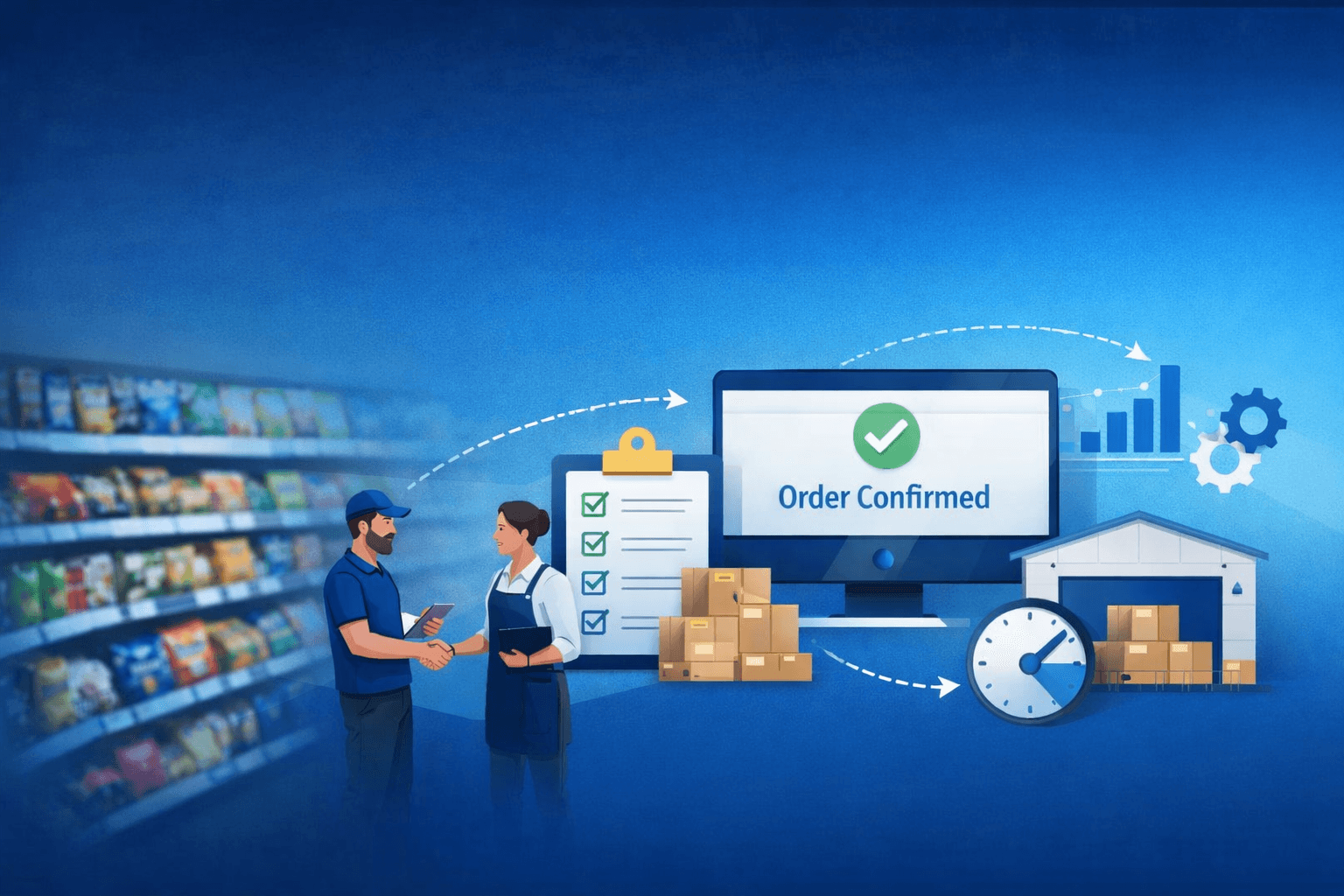
Five Ways to Make CPG Wholesale Ordering More Efficient
CPG vendors interact with retailers constantly — calls, emails, visits, follow-ups. Even when well-intended, these interruptions compete with a merchant’s most constrained resource: attention.
Retail operations have changed. Many merchants now juggle dozens — sometimes hundreds — of active supplier relationships. At the same time, consumer expectations continue to fragment, forcing retailers to carry more products, more variations, and more brands. Variety drives sales, but it also drives administrative workload.
Wholesale order management has quietly become one of the largest hidden costs in retail. It consumes staff time, introduces errors, slows replenishment, and pulls merchants away from revenue-generating activities. Over time, the friction compounds into margin pressure and operational fatigue.
Retailers often respond by pushing smaller brands toward distribution to reduce the number of direct vendor interactions. While logical, this creates new constraints: many emerging brands are not operationally ready for distribution, which can limit performance and slow growth.
For CPG vendors, this dynamic matters. Reducing ordering friction is no longer just a retailer problem — it is a growth strategy. Vendors who make ordering easier gain faster reorders, better shelf presence, and stronger merchant relationships.
1. Replace Manual Ordering With Structured Systems
Reliance on emails, spreadsheets, and ad-hoc processes guarantees inefficiency. Orders become fragmented, difficult to track, and prone to errors.
Structured digital ordering systems standardize how transactions occur. They reduce ambiguity, improve accuracy, and remove unnecessary back-and-forth between merchants and vendors.
2. Automate Repetitive Workflow
Order entry, confirmations, invoicing, and reconciliation are predictable activities. Treating them as manual tasks wastes time and introduces avoidable mistakes.
Automation compresses cycle time, improves consistency, and allows teams to focus on exceptions rather than routine processing.
3. Improve Inventory Visibility
Poor inventory signals are a root cause of ordering friction. When stock levels, availability, or demand patterns are unclear, both retailers and vendors operate reactively.
Real-time inventory awareness and proactive alerts stabilize replenishment and reduce costly stock disruptions.
4. Reduce Communication Overhead
Ordering inefficiency is often a communication problem disguised as a logistics problem. Unstructured conversations create delays, misunderstandings, and duplicated effort.
Shared digital workflows replace scattered messages with clear, transaction-level coordination.
5. Centralize Operational Data
When order history, product data, and performance metrics live in multiple systems, decision-making slows and errors multiply.
Centralized data environments enable faster analysis, cleaner reporting, and more confident planning.
Purchs was designed around this exact problem: eliminating wholesale ordering friction without adding complexity.
Retailers manage all vendors, products, and orders within a single workflow. Vendors receive structured, accurate transactions instead of fragmented requests. Both sides operate with fewer interruptions, clearer signals, and dramatically reduced administrative workload.
Efficiency gains are not incremental — they change how trading partners interact. Less time spent managing orders means more time spent driving sales, expanding distribution, and strengthening relationships.
Wholesale ordering does not need to be a persistent source of operational drag. With the right system design, it becomes a background process rather than a daily burden.
Frequently Asked Questions

Ready to Transform Your Wholesale Business?
Join thousands of businesses that trust Purchs to streamline their wholesale operations.